



Aluminium Honeycomb Panels
Redefining Modern Cladding: Composite Honeycomb Panels with Real-Wood Finish
 By
nexcomb
September 12, 2026
By
nexcomb
September 12, 2026
Natural wood has always carried a timeless charm in architecture. The warmth, texture, and visual richness instantly make spaces feel more welcoming. But let’s be honest, using real wood in modern construction is not always practical. Moisture damage, warping, termite attacks, regular polishing, and fire concerns eventually become long-term maintenance problems.
That’s exactly why wood-finish honeycomb panels are gaining attention in contemporary architecture.
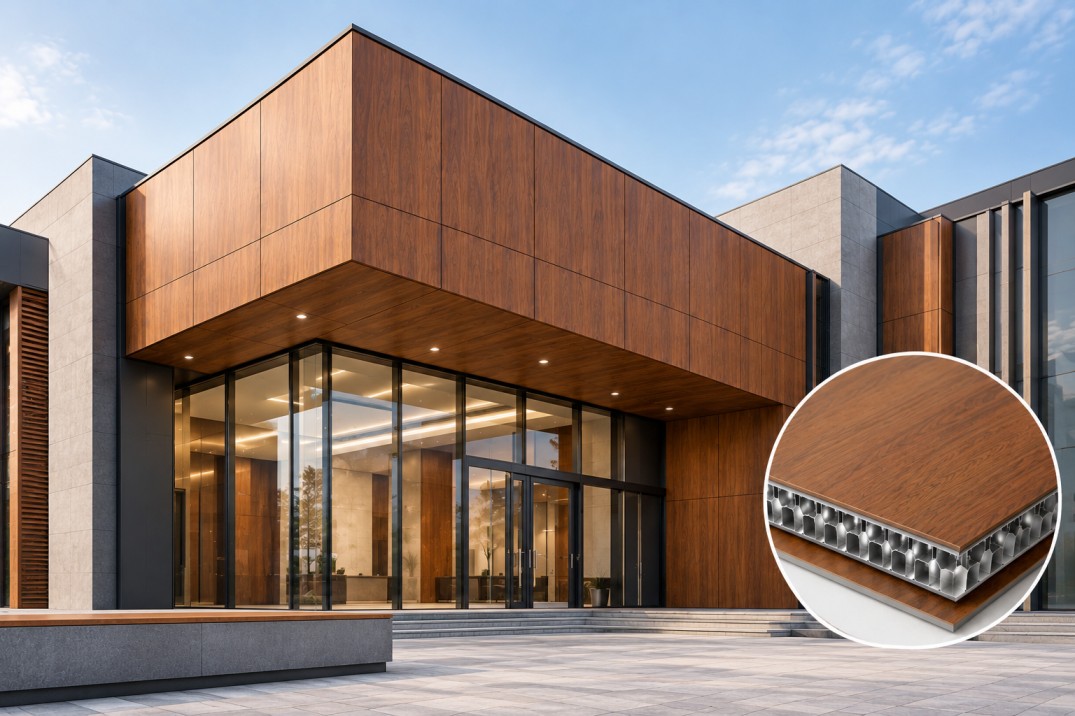
These panels combine the visual appeal of timber with the structural advantages of aluminium honeycomb technology. Architects today no longer want to compromise between aesthetics and performance. They expect both from a single material system.
At Aludecor, we have seen increasing demand for wood-finish honeycomb panels across hospitality projects, luxury residences, airports, commercial buildings, and modern retail spaces. The reason is simple. They offer the warmth of wood without the vulnerabilities associated with natural timber.
More importantly, aluminium honeycomb technology delivers excellent rigidity while keeping the overall panel lightweight. That balance changes how modern façades and interiors perform over time.
Strength vs Aesthetic Appeal Balance
One of the biggest advantages of wood-finish honeycomb panels is their ability to maintain structural stability without sacrificing design appeal.
The aluminium honeycomb core uses a hexagonal cellular structure that distributes load evenly across the panel surface. This engineering principle creates exceptional stiffness while keeping the panel significantly lighter than many traditional solid-core materials. Some aluminium honeycomb systems weigh nearly 60 to 80 percent less than comparable solid alternatives while still maintaining excellent flatness and rigidity.
This becomes extremely important in large façade applications where sagging or panel deformation can affect the building appearance over time.
At Aludecor, our composite wood honeycomb panels are designed to maintain dimensional stability even under fluctuating temperatures and humidity levels. Unlike natural timber, which expands and contracts with moisture exposure, engineered honeycomb panels retain their shape far more consistently.
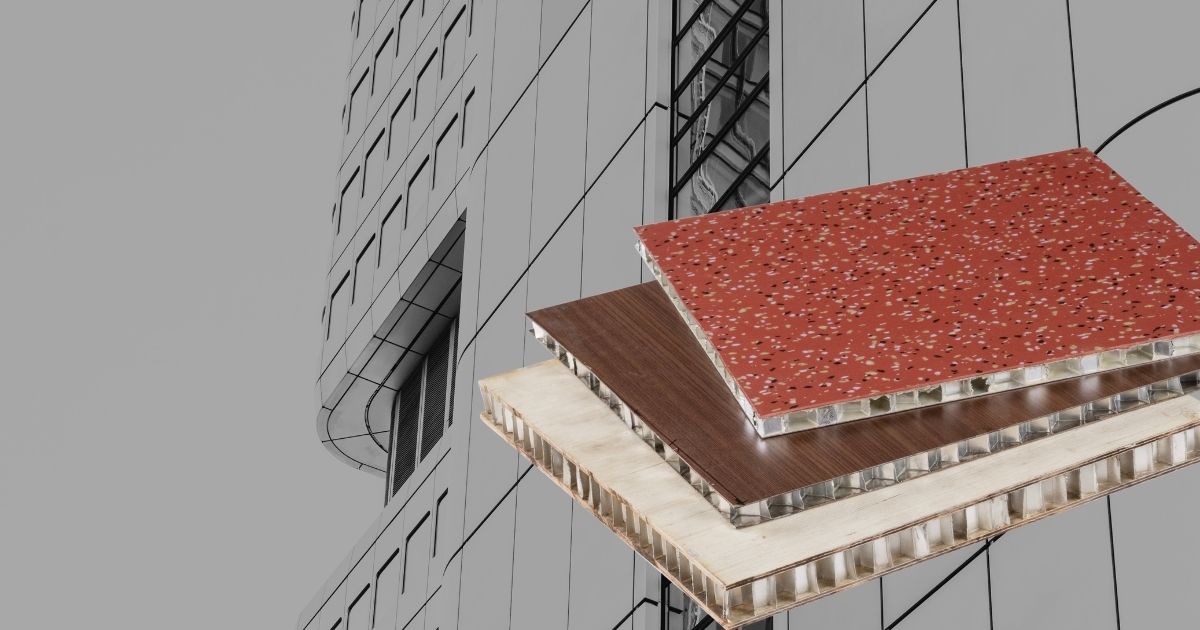
And aesthetically, modern surface technologies have improved dramatically. Advanced coating systems and textured finishes now recreate realistic wood grains such as walnut, teak, oak, and ash with remarkable precision. In many commercial applications, the visual difference between engineered finishes and real timber is barely noticeable.
That’s what makes these panels such an attractive option for architects seeking warmth without compromising reliability.
Thermal, Moisture & Fire Ratings
Performance has become a major consideration in façade specification, especially after increased global focus on building safety regulations.
This is where wood-finish honeycomb panels offer a clear advantage over conventional timber systems.
Aluminium itself does not absorb moisture, which significantly reduces risks associated with swelling, fungal growth, delamination, or termite damage. For climates with high humidity and heavy rainfall, this becomes a critical performance benefit.
At Aludecor, we continuously evaluate cladding systems based on long-term environmental exposure because exterior surfaces must withstand UV radiation, rain, pollutants, and temperature fluctuations for years.
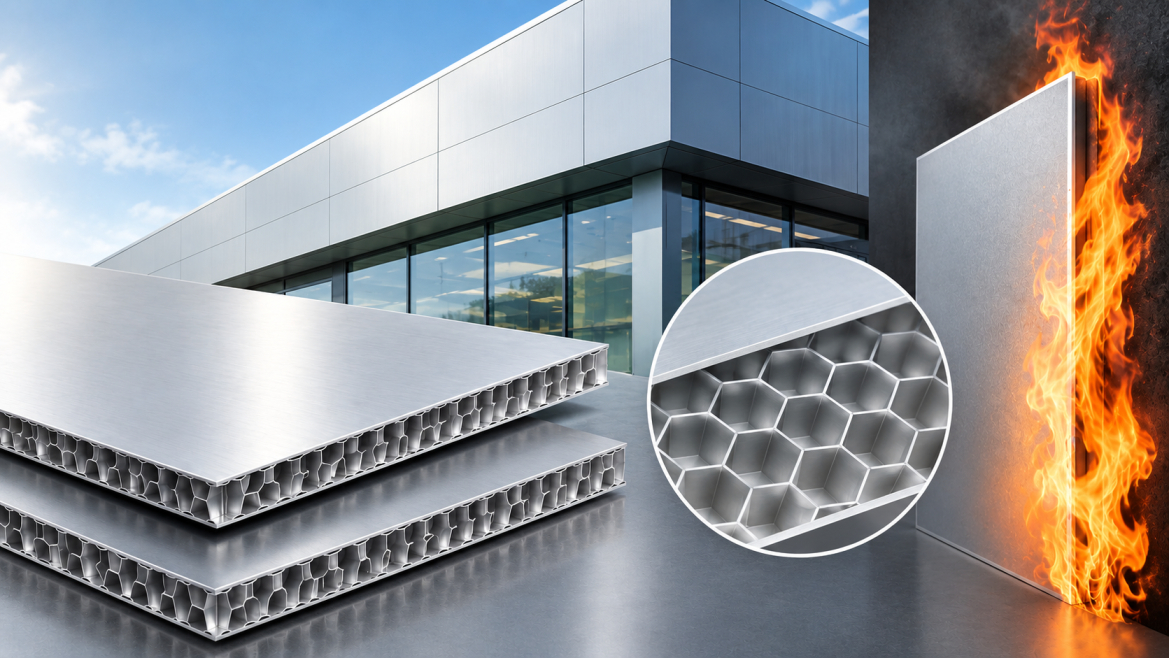
Fire performance is another important factor. Certain aluminium honeycomb systems achieve A2 or A1 non-combustible classifications depending on the composition and testing standards. Compared to untreated solid wood, this significantly improves overall façade safety.
Many lightweight wood-texture panels also contribute to improved thermal and acoustic behaviour due to the air pockets created within the honeycomb core structure. This may help reduce heat transfer while offering better sound insulation performance in large interior environments.3
So, while appearance remains important, the hidden engineering inside the panel matters just as much.
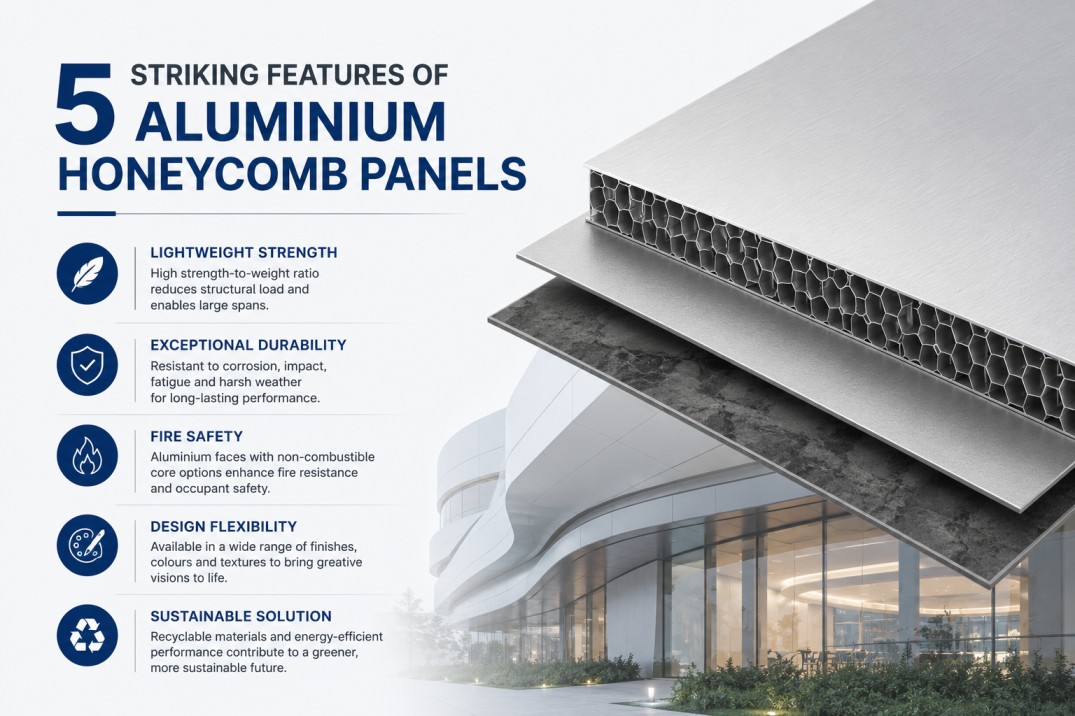
Also Read: 5 Striking Features of Aluminium Honeycomb Panels
Applications of Aluminium Honeycomb Panels in Interiors & Exteriors
The versatility of wood-finish honeycomb panels makes them suitable for a wide variety of architectural applications.
In exterior architecture, they are commonly used for:
- Ventilated façades
- Balcony cladding
- Soffits and canopies
- Entrance features
- Ceiling systems
- Decorative elevations
Because lightweight wood-texture panels reduce structural dead load considerably, they are especially beneficial for high-rise projects and renovation work. Lighter materials often simplify installation and reduce support structure requirements.
Inside buildings, the possibilities become even broader.
We have seen composite wood honeycomb solutions used in hotel interiors, luxury retail spaces, airports, reception areas, elevators, wall panelling systems, and modular furniture applications.
Interior designers particularly appreciate the visual consistency these engineered panels provide. Natural timber can vary significantly between batches, whereas wood-finish honeycomb panels maintain a more controlled and uniform appearance across large commercial projects.
That level of consistency is often difficult to achieve with traditional wood systems.
Design Flexibility with Natural Looks
Modern architecture is becoming increasingly experimental. Curves, layered façades, perforated surfaces, and seamless transitions between interiors and exteriors are now common design expectations.
And this is where these honeycomb panels become especially valuable.
Advanced fabrication techniques allow routing, bending, perforation, and customised shaping while maintaining structural stability. This gives architects far greater creative freedom compared to rigid solid timber systems.
At Aludecor, we are seeing growing demand for curved wood-grain surfaces in hospitality and premium commercial environments. Designers increasingly want materials that create natural warmth while still supporting contemporary architectural forms.
Another major advantage is surface durability.
Unlike natural timber, engineered composite wood honeycomb surfaces maintain colour consistency more effectively under UV exposure. High-performance coating systems improve resistance against fading, stains, pollutants, and weathering. This reduces long-term maintenance requirements significantly.
For commercial projects, where façade maintenance itself can become a recurring operational cost, this is a major practical benefit.
Aluminium Honeycomb Panel Vs Solid Wood Panels
Comparisons between engineered honeycomb systems and solid wood are unavoidable. But both materials serve very different construction expectations.
Solid wood undoubtedly offers authenticity and craftsmanship appeal. However, modern buildings increasingly require materials that deliver predictable performance, fire compliance, lower maintenance, and structural efficiency.
That’s where wood-finish honeycomb panels offer clear advantages.
Compared to traditional timber panels, composite wood honeycomb systems generally provide:
- Better stiffness-to-weight ratio
- Improved flatness across large spans
- Higher moisture resistance
- Lower structural load
- Faster installation
- Better fire performance potential
- Reduced long-term maintenance
Some honeycomb systems can weigh nearly one-fifth of comparable solid wood structures depending on the configuration.
And from a sustainability perspective, lightweight wood-texture panels help reduce dependency on natural timber while still delivering the visual appeal architects seek. Since aluminium is highly recyclable, the environmental impact across the material lifecycle can also be considerably lower.
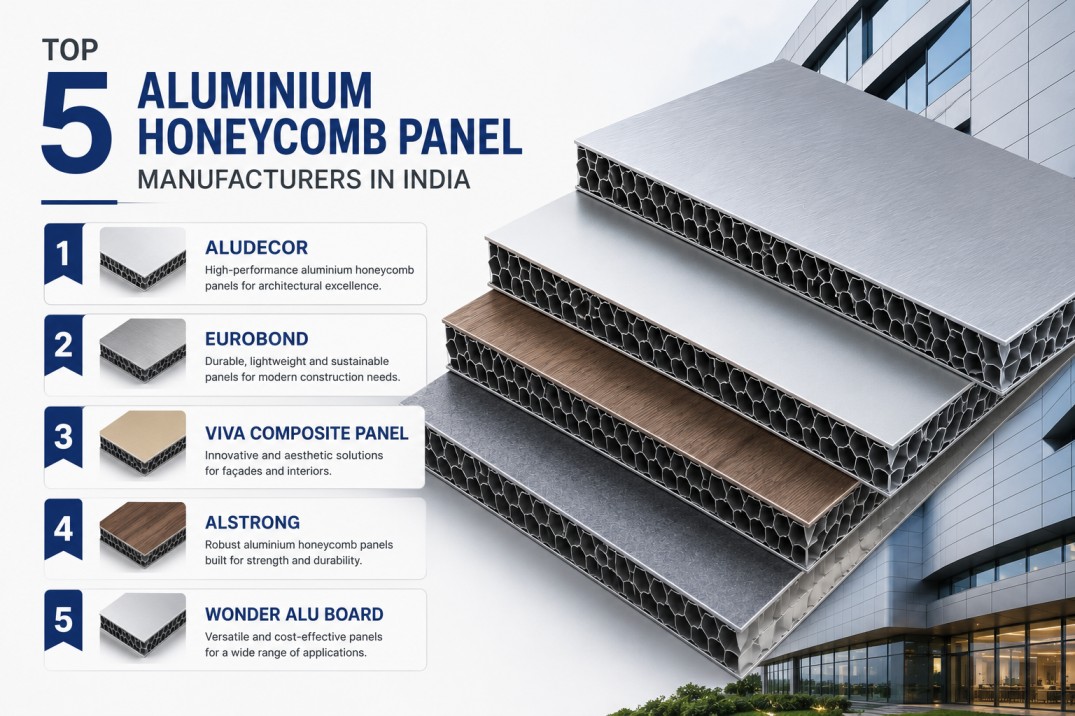
Also Read: Top 5 Aluminium Honeycomb Panel Manufacturers in India
The Growing Demand
Architecture today demands more intelligent materials. Aesthetic appeal alone is no longer enough. Modern cladding systems must perform structurally, thermally, visually, and safely at the same time.
That is precisely why wood-finish honeycomb panels are becoming increasingly relevant in contemporary construction.
They combine the warmth and sophistication of timber with the engineering precision of aluminium honeycomb technology. The result is a material system that delivers durability, lighter weight, better fire performance, and long-term visual consistency.
At Aludecor, we believe materials should not only look beautiful during installation. They should continue performing reliably for years under real environmental conditions.
And perhaps that’s what makes engineered honeycomb technology genuinely exciting. It preserves the essence of natural wood while solving many of its practical limitations.
Contact us at info@nexcomb.com or call 1800 102 0407 (Toll-Free) to connect with our expert panel consultants.
FAQs
Are wood-finish honeycomb panels durable?
Yes. These panels are specifically engineered for long-term durability in both interior and exterior environments. The aluminium core provides rigidity while resisting moisture-related swelling, warping, fungal growth, and termite damage commonly associated with natural timber. Premium coating systems also improve UV and weather resistance.
Where are they best used?
Wood-finish honeycomb panels are widely used in façades, ceilings, soffits, hotel interiors, airports, commercial buildings, reception areas, elevators, and luxury residential projects. Their lightweight structure makes them particularly suitable for large-format applications and high-rise developments.
Are composite wood honeycomb panels suitable for humid climates?
Yes. Since aluminium does not absorb moisture, composite wood honeycomb systems perform very well in humid and coastal regions. They are far less prone to swelling, delamination, or fungal deterioration compared to natural wood materials.
Do lightweight wood-texture panels require heavy maintenance?
No. Lightweight wood-texture panels generally require minimal maintenance compared to solid timber. Regular cleaning is usually sufficient, while advanced coating systems help protect the surface against UV exposure, stains, pollutants, and weather-related wear.