



Aluminium Honeycomb Cores
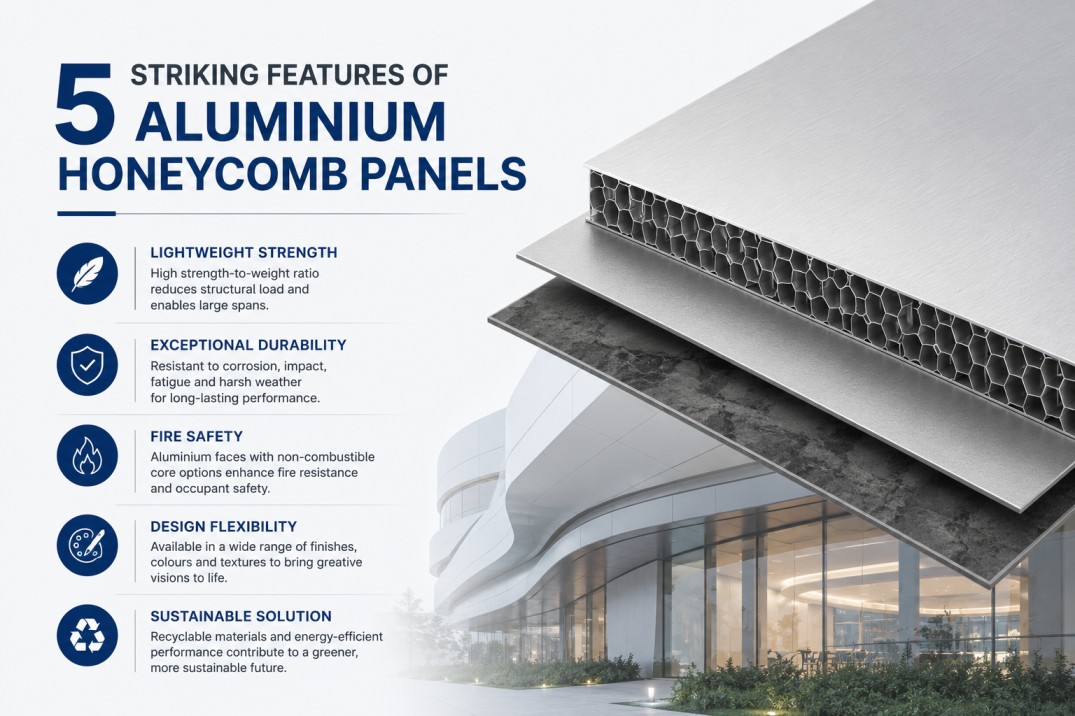
5 Striking Features of Aluminium Honeycomb Panels
 By
nexcomb
June 29, 2026
By
nexcomb
June 29, 2026
Modern architecture has become far more demanding than before. Today’s buildings are expected to look elegant, remain energy-efficient, reduce structural load, withstand harsh weather and comply with stricter fire regulations. And honestly, finding one material that balances all of these expectations together is not easy.
That is exactly why aluminium honeycomb panels are becoming increasingly important in facade engineering.
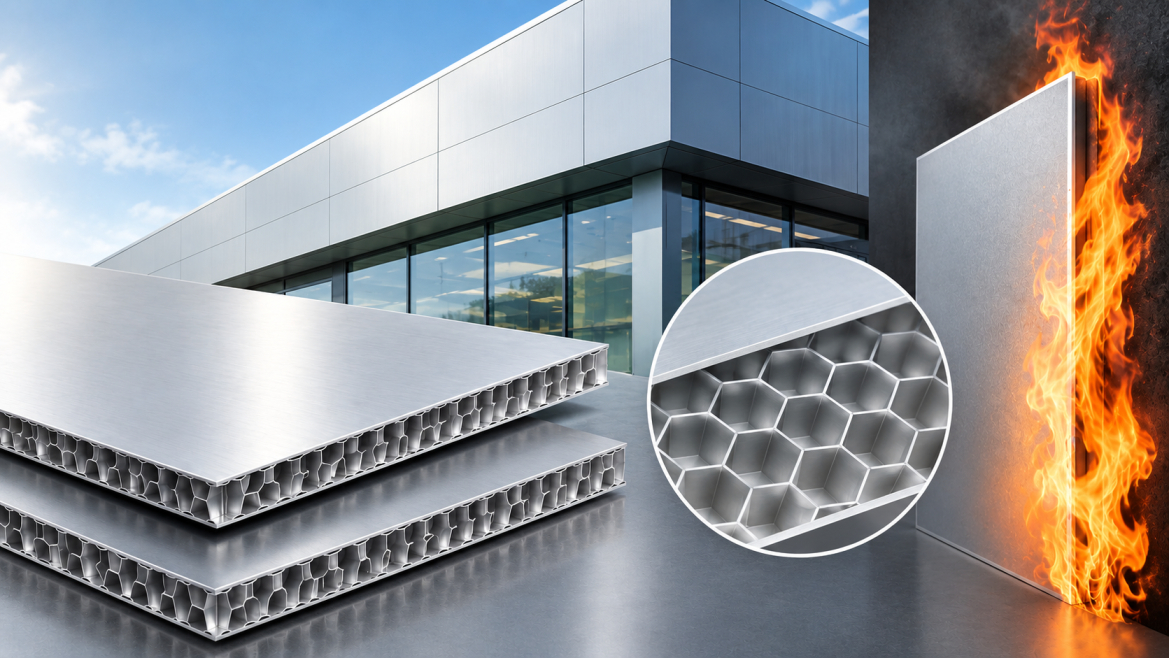
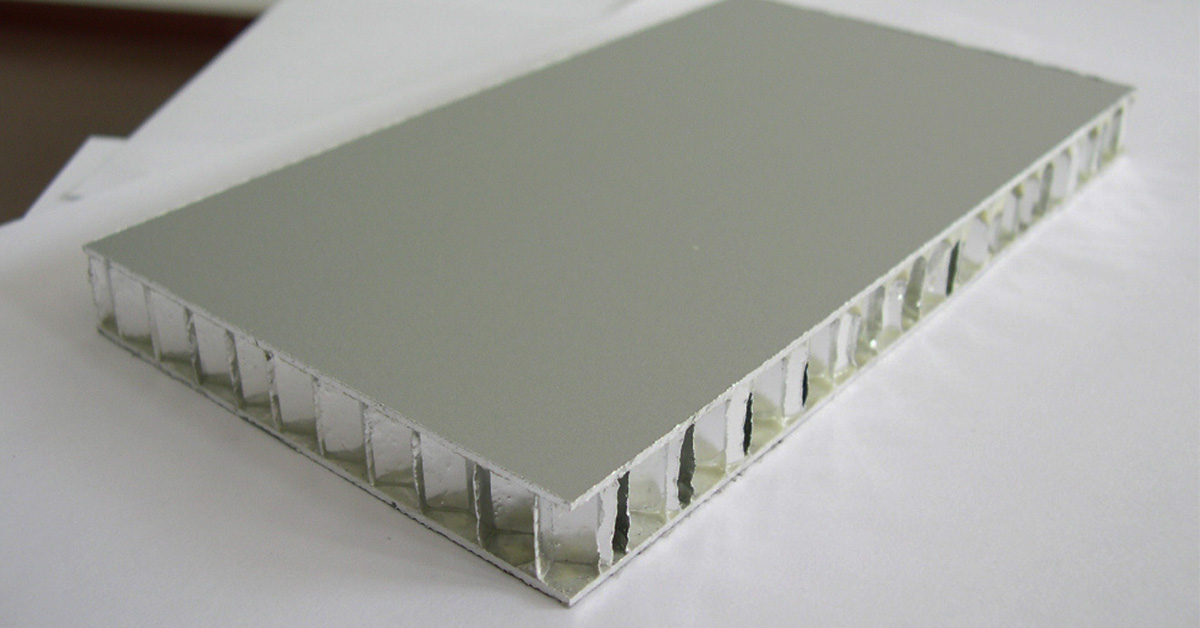
Inspired by the natural geometry of a beehive, these advanced panels combine rigidity with surprisingly low weight. One of the most remarkable aluminium honeycomb features is how efficiently the hexagonal core distributes structural loads while using minimal material. It’s smart engineering, honestly.
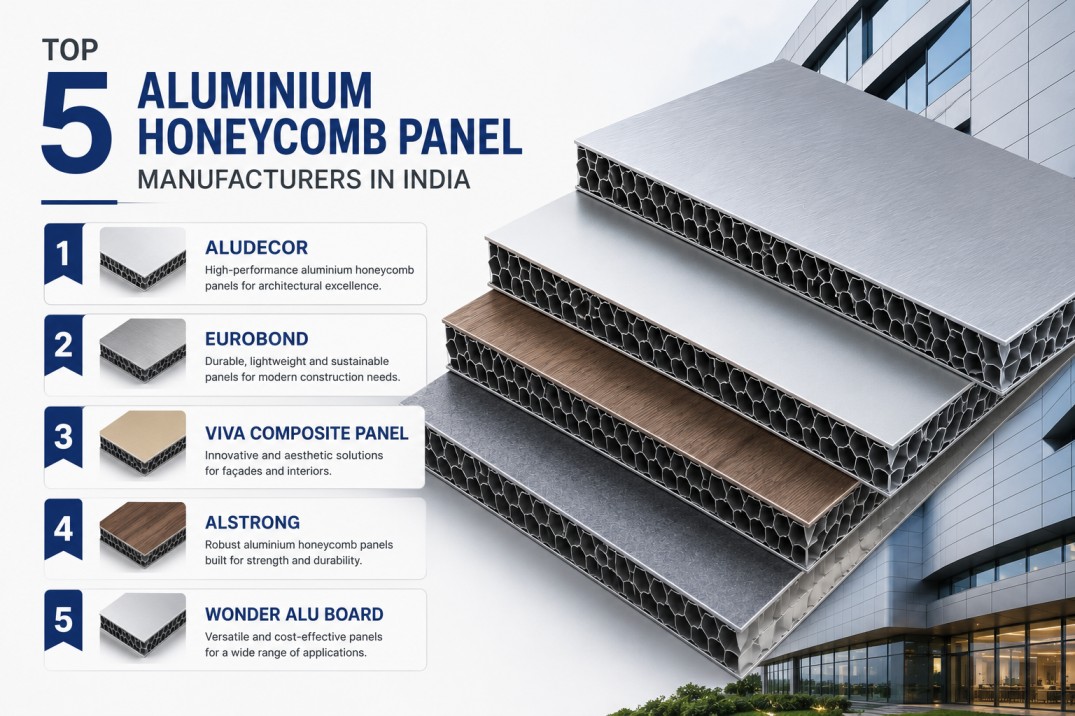
At Aludecor, our Nexcomb range has been developed to meet the evolving demands of modern facades, transportation projects, ceilings and interiors. Powered by our in-house Nexcore manufacturing facility, these panels are engineered for precision, durability and long-term performance.
Let’s explore the most important aluminium honeycomb features that make these panels stand apart in modern construction.
1. Lightweight Strength Advantage
The first thing most people notice about honeycomb panels is their weight. Or rather, the lack of it.
Despite being extremely lightweight, these panels deliver remarkable structural rigidity. One of the defining aluminium honeycomb features is the exceptional strength-to-weight ratio achieved through the hexagonal core structure.
The core behaves like multiple miniature I-beams working together. This distributes stress efficiently while maintaining panel stiffness. Unlike conventional solid sheets, honeycomb structures achieve high strength without excessive mass.
That’s one reason architects increasingly prefer these lightweight cladding panels for high-rise buildings and transport infrastructure.
For example, Nexcomb 10 mm panels weigh nearly 5.2 kg/sqm while maintaining excellent rigidity and flatness. Reduced weight means:
- Lower dead load on the structure
- Easier transportation
- Faster installation
- Reduced substructure requirements
These practical efficiencies are among the biggest honeycomb panel benefits in modern construction projects.
At Aludecor, Nexcore is manufactured using AA3003 H18 grade aluminium alloy, ensuring high load-bearing capability and consistent performance.
And let’s be honest, materials that reduce structural stress while maintaining durability naturally become valuable in large-scale architecture.
2. Flatness & Dimensional Stability
Facade aesthetics depend heavily on surface consistency. Even slight waviness or distortion can become highly visible on modern elevations.
Among the most practical aluminium honeycomb features is exceptional dimensional stability. The honeycomb core continuously supports the facing skins, helping the panel maintain flatness across large surface areas.
At Aludecor, Nexcomb panels are engineered as ready-to-fix systems with superior precision and flatness.
This becomes especially important in:
- Large seamless facades
- Corporate buildings
- Airports
- Retail architecture
- Curved elevations
Modern architecture increasingly relies on lightweight cladding panels that can deliver clean, uninterrupted surfaces without deformation over time.
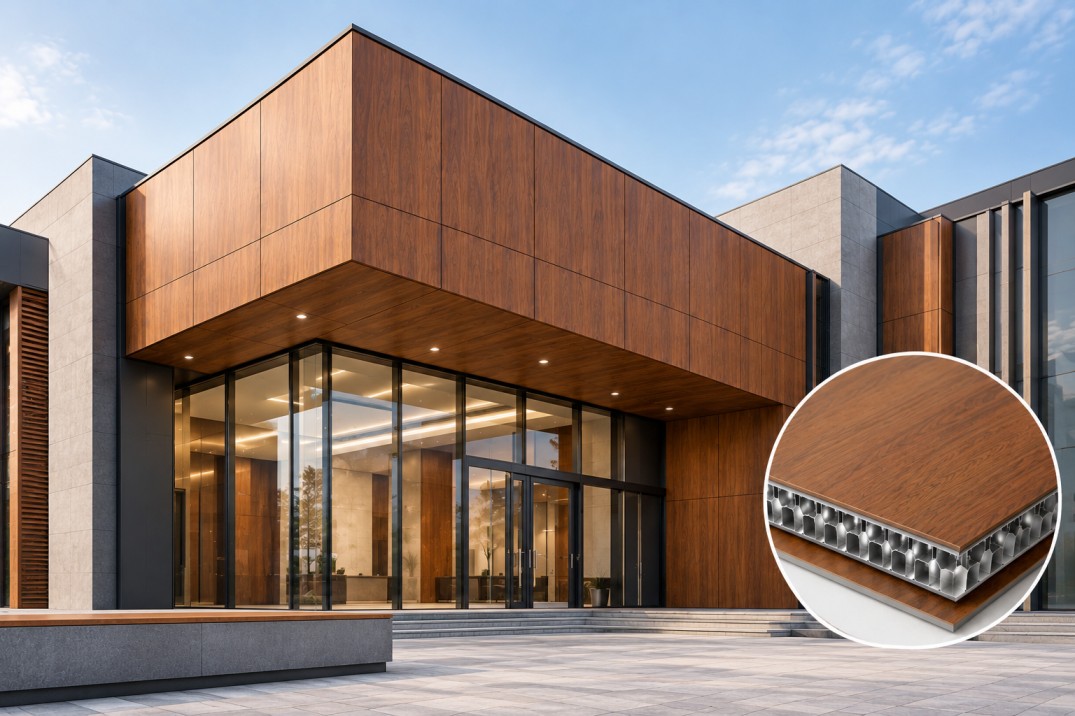
Another important aspect is flexibility. Nexcomb panels are available in thicknesses ranging from 6 mm to 100 mm and support curved applications with radii from 300 mm to 2,000 mm.
These capabilities allow architects greater freedom in facade design while maintaining structural reliability.
And honestly, this balance between visual elegance and engineering stability is one of the strongest honeycomb panel benefits available today.
3. Moisture, Impact & Fire Resistance
Facade materials today are expected to do far more than simply cover a building.
Safety, weather resistance and long-term durability now play a major role in material selection. One of the most critical aluminium honeycomb features is strong fire performance combined with lightweight construction.
Nexcomb panels achieve EN 13501-1 classification of A2-s1, d0. This indicates:
- Near non-combustibility
- Negligible smoke emission
- No flaming droplets
- Resistance to flame spread
For high-rise projects and public infrastructure, this level of performance becomes extremely important.
Beyond fire safety, Nexcomb panels are engineered for:
- Corrosion resistance
- Moisture resistance
- Weather durability
- Impact resistance
At Aludecor, panels undergo stringent testing standards including ASTM C393 for flexural strength and ASTM C365 for compressive properties.
One reason lightweight cladding panels are preferred in modern architecture is because they combine durability with easier handling and installation efficiency.
And these performance capabilities become major honeycomb panel benefits for architects looking for safer and longer-lasting facade systems.
4. Thermal & Acoustic Performance
Modern buildings are expected to improve indoor comfort while reducing energy consumption. That is where thermal insulation becomes highly relevant.
One of the standout aluminium honeycomb features is the insulating ability created by the cellular honeycomb core. The trapped air pockets help limit heat transfer, improving thermal efficiency within buildings.
This contributes toward:
- Lower HVAC dependency
- Improved energy savings
- Better indoor comfort
- Reduced operational costs
At Aludecor, we have seen rising demand for lightweight cladding panels that support sustainable construction and green building certifications like LEED and GRIHA.
Another valuable aspect is acoustic insulation.
Honeycomb structures naturally help dampen sound transmission, making them suitable for airports, auditoriums, commercial buildings and transportation projects.
These multi-functional capabilities are among the most practical honeycomb panel benefits for modern infrastructure.
And honestly, sustainable facades are no longer just a preference. They are becoming an expectation.
5. Design Flexibility & Applications
Architects today want materials that support creativity instead of restricting it.
That’s another reason why aluminium honeycomb features have become increasingly relevant in modern facade engineering.
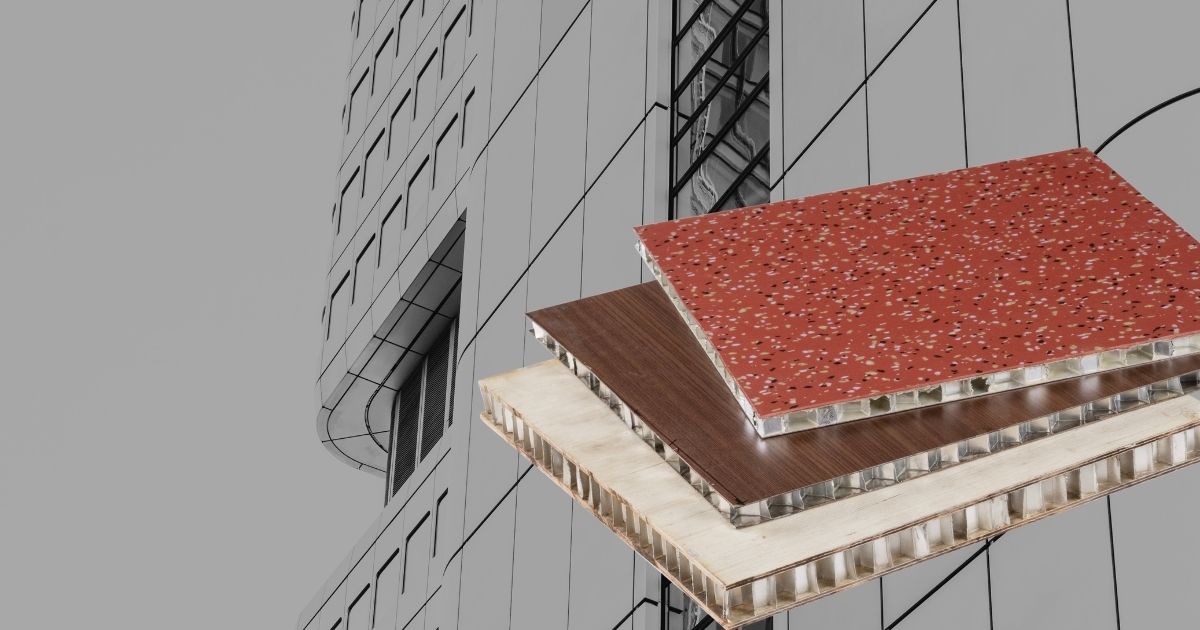
Nexcomb panels are available in multiple formats including cassette panels, curved panels, inclined panels and partition systems.
Because of their lightweight construction, these systems enable:
- Large-format facades
- Curved structures
- Ventilated elevations
- Dynamic architectural geometries
- Faster installation systems
This is why lightweight cladding panels are widely preferred for contemporary commercial projects and transportation applications.
At Aludecor, Nexcomb panels integrate seamlessly with stone, glass, metal louvers and ACP systems.
For example, stone-integrated honeycomb systems can become nearly 80% lighter than traditional solid slabs while maintaining high structural performance.
These installation efficiencies and design possibilities are some of the most visible honeycomb panel benefits in modern architecture.
Summary of Key Benefits
When evaluating facade systems today, architects increasingly focus on materials that balance performance with efficiency.
Some of the most valuable aluminium honeycomb features include:
- Exceptional strength-to-weight ratio
- Superior flatness
- Fire resistance
- Moisture and corrosion resistance
- Thermal insulation
- Acoustic performance
- Design flexibility
- Sustainable construction advantages
And together, these become highly valuable honeycomb panel benefits for modern building projects.
The growing shift toward lightweight cladding panels clearly reflects the industry’s preference for smarter, safer and more efficient facade materials.
Importance of Aluminium Honeycomb Panels in Modern Architecture
Architecture today demands more intelligent material solutions. Facades are no longer judged only by appearance. They are evaluated based on safety, sustainability, structural efficiency and long-term durability.
That is why honeycomb systems are becoming increasingly important in contemporary construction.
At Aludecor, our Nexcomb range combines precision engineering, in-house Nexcore manufacturing facility, and advanced quality control to deliver reliable facade performance across applications.
And honestly, once you fully understand these aluminium honeycomb features, it becomes clear why honeycomb technology is shaping the future of modern facades and lightweight cladding panels worldwide.
FAQs
What makes aluminium honeycomb panels unique?
Aluminium honeycomb panels are unique because they combine lightweight construction with high structural rigidity. The hexagonal cellular core distributes loads efficiently while maintaining flatness, durability and dimensional stability. They also provide thermal insulation, acoustic dampening and strong fire performance within a single engineered system.
Why are they preferred in architecture?
Architects prefer honeycomb panels because they allow large-format facades, curved applications and lightweight construction without compromising strength. They also support sustainable building practices through recyclability, lower dead load and energy-efficient performance.
Are aluminium honeycomb panels suitable for high-rise buildings?
Yes, aluminium honeycomb panels are highly suitable for high-rise buildings because of their low weight and strong structural stability. Reduced dead load lowers stress on the building structure while improving installation efficiency and facade performance. Their fire-resistant properties also make them suitable for modern safety requirements.
Can aluminium honeycomb panels be used for interior applications?
Absolutely. Honeycomb panels are widely used in ceilings, partitions, cleanrooms, transportation interiors and decorative wall systems. Their flatness, lightweight construction and acoustic performance make them ideal for both exterior and interior architectural applications.